
Workshop systems for watchmakers: the options
The workshop is often the store's most profitable square metre, and the one run on the most paper. Here are the ways to organise it.
A repair is a long conversation: drop-off, assessment, quote, parts on order, work, inspection, notification and collection. In many stores that conversation lives in a binder, on slips in envelopes and in the watchmaker's head. It works fine, right up until it does not.
This overview is written by us at Cadran, and we supply the workshop as part of our retail system. We have included the options as they are actually used.
The binder and the spreadsheet
Paper is fast at the counter and needs no training. But the history is locked to the sheet: no one sees status without leafing through, no one is notified automatically, and when the client calls, the search begins.
The spreadsheet is the binder's digital cousin. It gives an overview of open jobs, but it does not connect to the till, the stock or the client's history, and it does not update itself.
Standalone tools
Some workshops use general task boards or form tools. They provide status and reminders, and they are a real step up from the binder.
But the job still lives apart from the store. The payment has to be entered at the till by hand, the parts are not in the stock, and the watch's service history ends up in yet another system no one checks at the next visit.
The workshop as part of the retail system
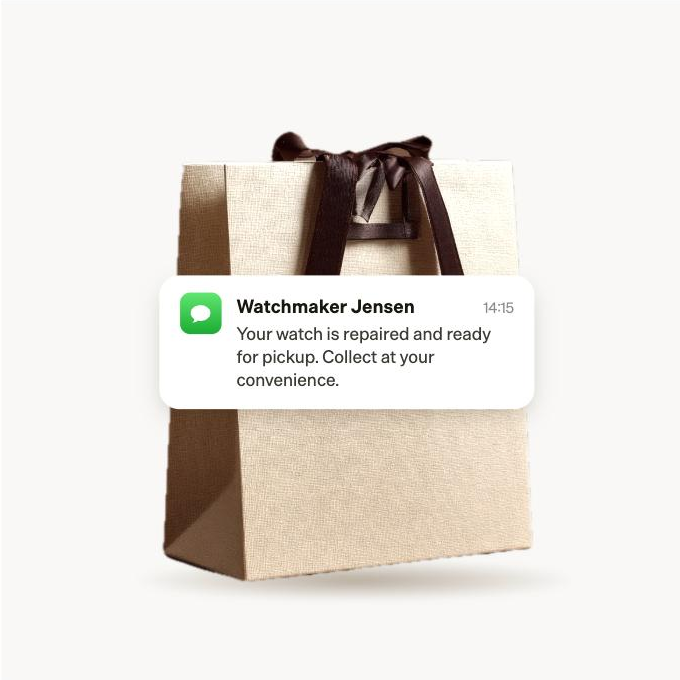
When the workshop lives in the same system as the till, the drop-off starts a track: the watch is photographed at the counter, the job gets a status and a deadline, parts are ordered against stock, the client is notified by SMS automatically when the watch is ready, and payment happens at the till with everything already filled in.
The history attaches to the serial number. The next time the watch comes in, the previous service is ready before the client has explained the errand. That is how Cadran is built, and it is what a trade system has to deliver to earn its place.
How to choose
Count the jobs. If the workshop has more than a handful of open jobs at a time, the binder costs more than a system. The requirements are few but absolute: photos at drop-off, a status the client can trust, automatic notifications and history per serial number.
The test is the same as for the till: ask the vendor to show a repair from drop-off to the SMS alert. If it takes under a minute, the workshop was designed in from the start, not bolted on.